
Calcium Correction Calculator Effective for Hypoalbuminemia and Hyperalbuminemia
The Calcium Correction Calculator is used to adjust total serum calcium levels based on albumin concentration, helping accurately assess calcium status in patients with hypoalbuminemia or hyperalbuminemia. It assists clinicians in diagnosing and managing calcium imbalances. Corrected calcium calculation ensures appropriate treatment and monitoring of electrolyte disorders.
Calcium Correction Calculator is intended for informational and educational purposes only. It should not be used as a substitute for professional medical advice, diagnosis, or treatment. Always consult your healthcare provider.
What is Calcium?
Your body requires calcium to stay healthy and perform a number of crucial processes. It is a necessary mineral having important roles in blood clotting, nerve transmission, muscle contractions, and bone health. The majority of calcium in the body is stored in the bones and teeth, where it gives them strength and structure. For example nerves to function properly needs calcium that helps in transmitting the impulses and to make possible the communication of the organ with the brain.
Deficiency of the calcium has some side effects such as increasing the risk for osteoporosis, weakness of the bones and affecting other functions of the body. For the diagnosis and treatment of a variety of medical disorders, accurate calcium evaluation is essential.
Understanding Albumin’s Role in Calcium Levels
Around 40–50% of serum calcium is held together by albumin, a key protein in blood plasma, creating a passive reserve. Ionized (free) calcium is one of the types of calcium that is biologically active in the body. In some cases even that, ionized calcium is in a normal state, low levels of albumin (hypoalbuminemia) might make total calcium levels look unusually low.
On the other hand the same thing happen for Hyperalbuminemia that are high albumin levels that falsely show high total of calcium. Healthcare providers commonly use a calcium correction formula to prevent false evaluation and to be more precise. Accurate diagnosis and treatment of calcium problems, especially in critically sick or hospitalized patients, depend on an understanding of this relation.
What is Calcium Correction?
To ensure correct patient evaluation and care, it is essential in clinical practice to check calcium levels. To provide a more accurate and realistic evaluation of the active levels of calcium on the body, calcium correction is used to improve levels of serum calcium when albumin levels are low. In illnesses such as liver disease, nephrotic syndrome or malnutrition when the albumin levels may be lower, calcium correction is very crucial.
For doctors to evaluate the success rate of treatment, separate actual hypocalcemia from a falsely low result, and contribute to identifying the underlying causes of hypercalcemia, correction is required. Beside being a helpful method, calcium correction is an estimation. In cases that are not clear of important, immediate ionized calcium measurement is recommended.
Calcium Correction Formula
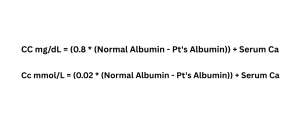
When to Use Calcium Correction?
When evaluating total blood calcium levels in a state of unusual albumin concentrations, calcium correction is crucial. Total calcium could be incorrectly low due to low albumin (hypoalbuminemia) or incorrectly higher due to raised albumin levels (hyperalbuminemia). To be more accurate when determining the ionized calcium, the biologically active form, can be achieved by adjusting the for albumin.
Direct evaluation of ionized calcium is advised for precise diagnosis in patients with different illnesses such as acid-base imbalances and deficiencies or unusual protein bases. It’s important to take into account extra factors that may affect calcium levels, such as blood pH and specific medications.
Benefits of Calcium Correction?
This method assist in ensuring a more precise measurement of active calcium by modifying the total calcium amount based on albumin concentration. This helps determine the best course of treatment and avoids incorrect diagnosis, particularly in patients with hypoalbuminemia. By displaying the actual calcium level, it helps prevent unnecessary treatments.
On the clinical levels, it helps in the identification of the different treatment based on the disease such as hypercalcemia or hypocalcemia, in particular for patients with severe illness or chronic kidney disease. In laboratory practices the implementation of the calcium correction is common method used, by supporting and indicating the importance that it give in patients care results.
Limitations of Calcium Correction?
The calcium correction formulas used to determine the levels of the ionized calcium from the total calcium evaluation have some limitations. In some situations they may not be as accurate as they seem, in particular cases like making true hypocalcemia or overestimate hypercalcemia. Some factors and conditions such as severe acidosis or hypoalbuminemia, albumin levels and pH can be factors that have an impact on the accuracy of the evaluation. Because the direct measurement of ionized calcium is preferred and accurate in representing the biologically active calcium, in complex and urgent cases is more preferred. There are various correction formulas, and the suitability of each may differentiate based on patient populations and clinical settings.
Explore More Helpful Health Tools
Our website is here to create tools that help people to make better life choices and having your body and mind in control. We provide a range of health related tools like the GAD-7 Anxiety Test designed to support your well-being.
Below you will find a couple of them and much more that are just a search away . If you don’t find any specific test or calculator you’re looking for please feel free to contact-us so we can create it for everyone.
Serum Anion Gap Calculator
Quickly calculate the serum anion gap to assess acid-base disorders like metabolic acidosis.
FENa Calculator
Determine the fractional excretion of sodium (FENa) to differentiate between prerenal and intrinsic renal causes of acute kidney injury.