
Parkland Formula for Burns
The Parkland Formula is a widely used method to calculate fluid resuscitation needs for burn patients during the first 24 hours. It considers the patient’s weight and the total body surface area (TBSA) affected by burns. Proper use of the formula helps prevent shock and supports recovery in severe burn cases.
Parkland Formula Calculator is intended for informational and educational purposes only. It should not be used as a substitute for professional medical advice, diagnosis, or treatment. Always consult your healthcare provider.
Introduction to Burn Resuscitation
Burn Resuscitation is crucial medical procedure for patients with severe burns, it is essential for restoring circulation, avoiding shock, and keeping organ perfusion in burn patients. The primary goal is to regain lost fluids, often with Lactated Ringer’s, while regulating according to urine production. The probability of survival was significantly increased with the early use of fluid resuscitation, which was supported and guided by formulas such as the Parkland Formula.
Burn resuscitation continues to be an important aspect in current burn care, connecting the gap between the original injury and the final course of medical treatment. Proper burn resuscitation not only increases survival rate but also reduces complications such as organ failure and tissue damage.
Understanding Burn Severity and Classification
Burn severity is determined by the skin depth that is damaged and the total body surface are (TBSA) percentage that is affected. The type of burn is categorized into 3 main categories such as first-degree (superficial), second-degree (partial-thickness), and third-degree (full-thickness). The tissue damage burns are identified by the level of tissue damage they cause like damage to muscles or bones.
The severity of the condition depends on the body area that is affected, if there are any other injury present and patients age group, because child and older patients are at higher risk. All third-degree burns and severe or unclear second-degree burns require immediate medical attention.
Role of Total Body Surface Area (TBSA) in Burns
When determining the severity of a burn, directing fluid resuscitation, planning medical care, and deciding whether to transfer a patient to a specialized burn hospital, total body surface area (TBSA), is an essential measurement. It evaluates how much skin has been damaged by partial or full-thickness burns. With a high percentage of TBSA indicates a higher risk of effects, such as burn shock, which may impact outcome. TBSA is also used to prioritize patients in mass-casualty cases and to determine how much fluid a person may need. Some of the most common method to estimate the TBSA are the Palmar Method, the Rule of Nines and the Lund-Browder Chart.
Why Fluid Resuscitation is Critical
Fluid resuscitation is very crucial for recovering blood volume, stabilizing cardiac output, and providing enough oxygen delivery to organs and tissues. It is especially crucial in situations where the circulation volume is reduced, such as shock, acute dehydration, and bleeding. Having the right management of fluids helps in optimizing tissue oxygenation, supports cellular activity and corrects hypovolemia. Based on the special needs that patient may need, healthcare providers have to adapt the type and volume of fluids and monitoring the patients response. Doctors have to watch their patients if any complication occur like electrolyte imbalances, pulmonary edema, and fluid overload.
What is the Parkland Formula?
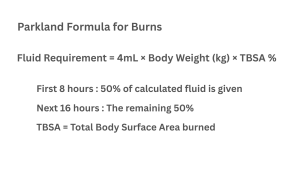
Parkland Formula is a method that is used to calculate the IV fluid needs during the first 24 hours after the injury. It suggests 4 milliliters of lactated Ringers per kilogram of body weight per percentage of total body surface area (TBSA) burnt for adults and 3 milliliters per kilogram of TBSA for children. During the first eight hours, half of the total fluid is given and the remaining amount is administered during the next 16 hours.
It requires constant evaluation and modification depending on vital signs and urine output. Parkland formula assists in directing initial fluid resuscitation to avoid hypovolemia, preserve tissue perfusion, and minimize effects. The primary focus of this method is in the first 24 hours of treatment and it doesn’t include the maintenance of fluids and other daily needs.
Clinical Use of Parkland Formula
Parkland formula for burns is the primary method used to evaluate the initial volume of crystalloid fluid within the first 24 hours. For adults and children with major partial-thickness or full-thickness burns, it directs fluid resuscitation. This method offers a useful place to start, fluid requirements might change based on things like electrical burns, inhalation injuries, or delayed treatment, requiring careful monitoring and customized modifications. It provides to doctors a practical way of estimating the initial fluid need directly after a burn injury. Also, the parkland burn formula assists them in starting the fluid faster to keep the blood flowing and protect the organs.
Advantages of Parkland Formula
As we have mentioned throughout the article that the parkland formula for buns that is a simple and standardized way of calculating the initial fluids requirements for burn is also one of his advantages. Also the parkland burn formula assists in preventing burn shock, maintain tissue perfusion, and improve survival rates.
Its global usage provides excellent early results and enables the implementation of fluid resuscitation in emergency situations, especially with serious burns that damage a significant part of the body’s surface area. Parkland burn formula provides clinicians with a solid foundation that allows them to modify fluids in response to patient response. During the crucial first 24 hours, it also lessens the problems brought on by either too much or too little resuscitation.
Limitations of Parkland Formula
Beside having some good advantages parkland formula burns comes along with some limitations. One of them is the is the possibility of over-resuscitation, which can result in organ problems, edema, and fluid overload. In situations involving electrical burns, inhalation injuries, or other complicated burn types, it can underestimate the amount of fluid required. Comorbidities, unique patient factors, and the dynamic physiological changes following severe burns are not fully taken into account by the formula. It mainly provides advices for the first 24 hours and doesn’t consider individual differences, so continuous monitoring and changes are needed to avoid giving too much fluid.
Discover More of What We Offer
Our website is focused on providing tools that inspire people to make healthier choices and take charge of their body and mind. We feature a range of health calculators, such as the Parkland Formula Calculator, all designed to support your overall wellness.
Below, you’ll find two examples of these tools, with many more available through a quick search. If you don’t see the test or calculator you’re looking for, simply reach out. We will be happy to create it for you and others who may benefit.
Light’s Criteria for Exudative Effusions
A diagnostic tool used to differentiate between exudative and transudative pleural effusions based on protein and LDH levels.
Cardiac Output Calculator (Fick’s Formula)
Estimates cardiac output by measuring oxygen consumption and the difference between arterial and venous oxygen content.